


In modern automotive, mechanical equipment and intelligent hardware industries, the quality of structural casting parts directly determines the service life, assembly accuracy and operation stability of finished products. Many manufacturers only focus on surface dimensional parameters when purchasing parts, but ignore material density, internal stress, wear resistance and corrosion resistance hidden defects, which eventually lead to frequent failures, high maintenance costs and delayed delivery cycles in later production. Choosing reliable aluminum alloy die casting components becomes the core key to avoiding long-term industrial losses and optimizing overall production efficiency.
Most low-cost die casting products on the market suffer from uneven wall thickness, tiny internal pores and insufficient surface smoothness. These invisible defects cannot be detected by simple appearance inspection, but will cause air leakage, oil leakage, fracture and deformation after high-pressure operation, vibration operation or long-term high-temperature use. Industrial processing enterprises often bear unexpected scrapping losses and after-sales compensation risks because they cannot identify these potential quality hazards in advance. Professional customized die casting solutions can fundamentally eliminate such hidden troubles from raw material selection, mold design to finished product finishing.
Strict material ratio and standardized die casting process are the basis for stable performance of aluminum alloy structural parts. Irregular smelting temperature, unreasonable mold cooling speed and incomplete pressure holding process will change the internal metallographic structure of aluminum alloy, reducing tensile strength and impact resistance sharply. Enterprises without professional technical testing often use unqualified parts blindly, resulting in reduced product safety grade and failure to pass industry certification inspections. Long-term cooperation with formal casting manufacturers can effectively avoid unstable batch quality and inconsistent performance between different batches of parts.
RoseStar Precision Casting adheres to full-process quality control standards covering raw material inspection, mold trial production, pressure casting forming, CNC precision machining, surface treatment and finished product testing. Every batch of aluminum alloy die casting parts undergoes strict dimensional tolerance detection, air tightness testing, hardness testing and appearance flaw scanning. The whole production chain follows international industrial standards, ensuring that each finished part meets high-precision assembly requirements and complex working condition adaptability.
Assembly matching degree is another easily overlooked core demand of die casting application. Many standard universal parts cannot perfectly fit customized mechanical structures, resulting in gaps, loose installation and repeated debugging. Excessive manual polishing and secondary processing will damage the original precision structure of parts, shorten service life and improve overall processing cost. Customized die casting production can tailor wall thickness, hole position, contour structure and surface accuracy according to actual equipment parameters, realizing direct assembly without additional modification and greatly shortening production assembly cycle.
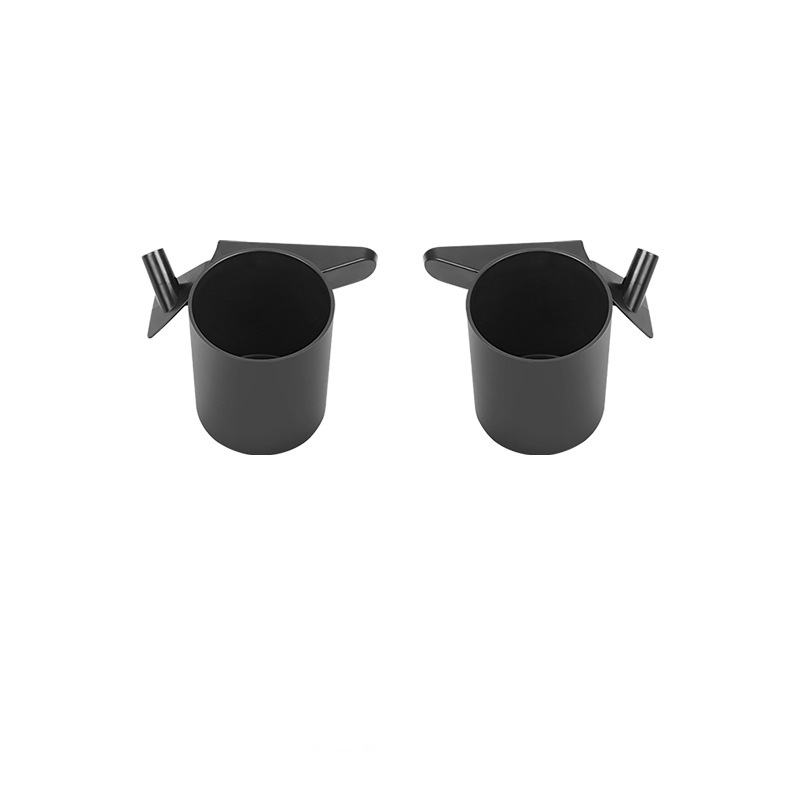
Common User Needs & Corresponding Professional Solutions
| User Typical Demand | Common Low-Quality Product Problems | Professional High-Precision Die Casting Advantages |
|---|---|---|
| High dimensional accuracy for precision assembly | Large tolerance deviation, mismatched hole position and interface | CNC integrated machining, tolerance controlled within micrometer level |
| Long-term stable use under high temperature & vibration | Easy deformation, fatigue fracture, internal pore expansion | Compact dense structure, low internal stress, strong fatigue resistance |
| Corrosion resistance and oxidation resistance in harsh environments | Fast surface oxidation, peeling, corrosion damage | Anodizing, powder spraying and multi-layer anti-corrosion surface treatment |
| Batch consistency for mass production | Unstable size and performance between batches | Standardized automatic production, unified process parameters |
| Low overall comprehensive use cost | Frequent scrapping, high maintenance and replacement cost | Low rejection rate, long service life, no frequent secondary processing |
Deep hidden problems behind aluminum alloy die casting applications are rarely mentioned by ordinary suppliers. The first one is residual internal stress. Improper casting cooling will leave invisible stress inside parts, which slowly releases during operation, causing gradual deformation and precision drift. The second one is hidden porosity defects. Tiny pores will cause air pressure instability and medium leakage in hydraulic and pneumatic equipment. The third one is mismatched surface treatment. Simple spraying cannot adapt outdoor humid, corrosive and dusty working environments, accelerating aging failure of parts.
Reasonable surface treatment process directly improves the comprehensive performance and application scope of aluminum alloy die casting parts. Anodizing forms a dense protective oxide film on the surface, greatly enhancing wear resistance and insulation performance. Sand blasting treatment optimizes surface roughness to meet bonding and sealing requirements. Electroplating and passivation processes strengthen anti-rust and anti-corrosion ability, adapting outdoor engineering, automobile chassis and heavy mechanical working conditions. Different application scenarios require matching surface technology, and blind unified treatment will greatly reduce practical service life.
Die casting mold design level also determines the upper limit of part quality. Poor mold structure leads to flash burrs, uneven filling and easy cracking of parts. Mature precision mold design optimizes material flow path, reduces unnecessary processing procedures, improves production efficiency and reduces single product cost. At the same time, optimized mold structure supports stable mass production, ensures that thousands of finished products maintain highly consistent precision and performance, and fully meets large-scale supporting production needs of industrial customers.
In actual industrial operation, many enterprises pursue low unit price blindly while ignoring comprehensive cost performance. Cheap die casting parts save short-term procurement expenses, but bring frequent equipment failures, assembly delays, safety hidden dangers and after-sales losses. High-quality precision aluminum alloy die casting parts reduce later maintenance, scrapping and debugging costs comprehensively, stabilize production rhythm, improve product qualification rate and bring continuous long-term economic benefits for enterprise operation.
Choosing suitable aluminum alloy die casting parts is not only selecting a single component, but matching a complete set of technical service, quality guarantee and customized production capacity. Reasonable process matching, strict quality inspection, customized structural design and perfect after-sales coordination jointly build stable industrial supporting advantages. Only by grasping both surface application needs and deep hidden quality pain points can enterprises select die casting products that truly match long-term development and avoid unnecessary production risks and economic losses.